
happenings

The Dover Seafest
Just a couple of months after we arrived in Tasmania, we attended the local Dover Seafest. Located just 20 minutes south of where we live, Dover is a sleepy seaside village still with the feel of a 1970s coastal holiday location. You might have holidayed at such a place. One that came alive during the summer months. Where many of the houses were vacant for much of the year, decorated with mismatched furniture castoffs and kitchen equipment that had outgrown the regular family home and had been relegated to the beach house. Days would be spent playing on the beach, building sandcastles, exploring rock pools, and swimming. A jetty for fishing from and a ramp for easing a boat into the water. A place where you could leave everything on the beach and return after lunch to find it just as you had left it. This is Dover. Whilst it might have acquired a touch more polish, at its heart, it remains a coastal holiday village, where the rhythm of the day is slow and steady and determined by the weather.
Each year in early March, the Dover foreshore is transformed for a festival. Local stallholders spruiking their wares. Food trucks offer a surprising array of options. There is face painting, mermaids, lobster costumes and live music. It’s all very idyllic and quaint. For the past few years, we have been bemused by the older couple dressed as pirates, complete with a stuffed parrot, who play various instruments and dance small wooden clicky puppets on a board in time to the music. It felt like a throwback to the days of court jesters and Punch and Judy shows, and it did make us wonder what on earth we had moved to. (They were unfortunately missing this year!). This was not the world of sophisticated entertainment. No fireworks, light shows, state-of-the-art acoustics or world-class entertainment, just simple, wholesome fun.
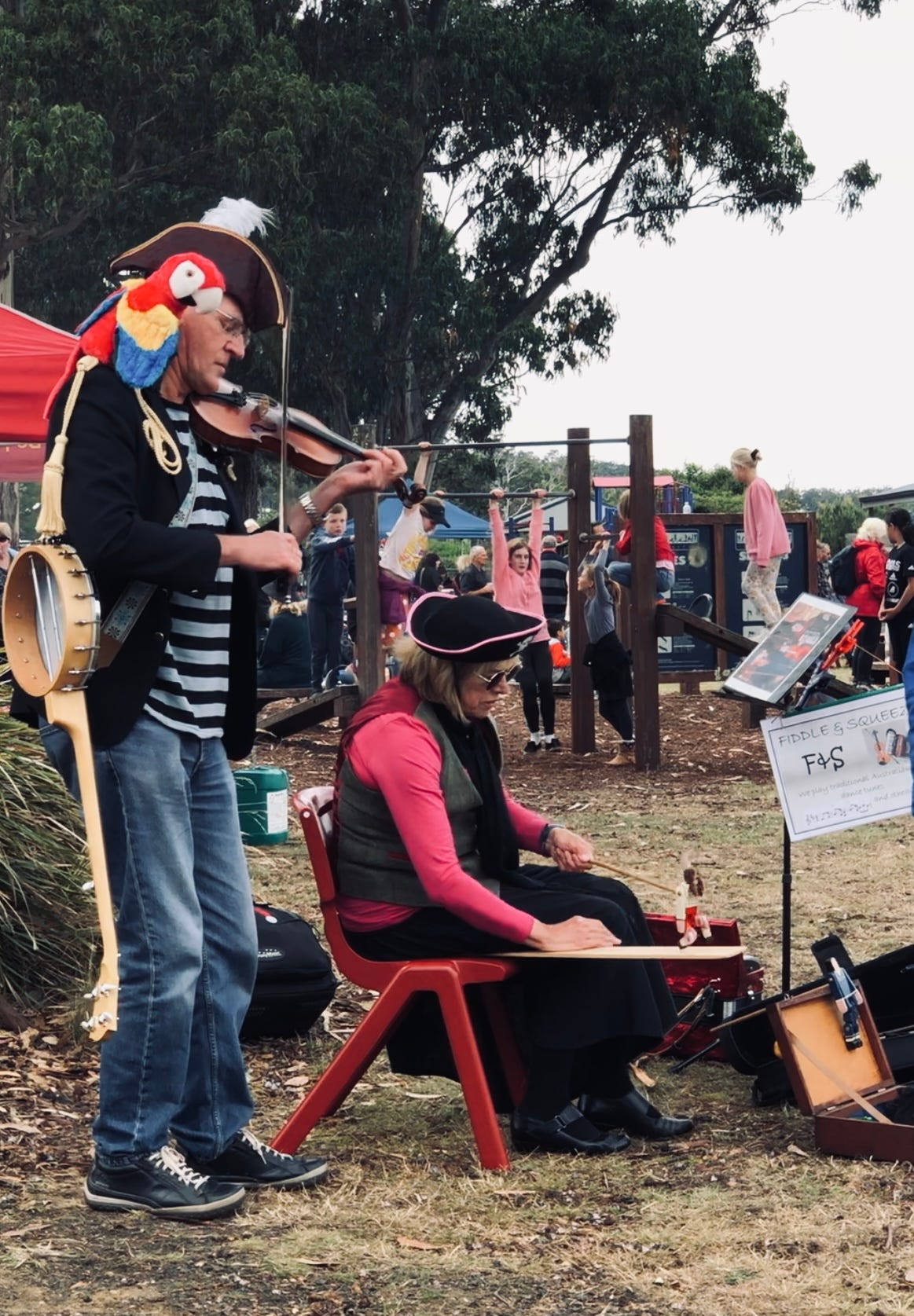
It was a gorgeous Autumn day for this year’s Seafest - a t-shirt weather day. A day for a wine or two, a sampling of various foods, music in the background, kids and dogs running around, conversations with all the people you realise you know and a few hours spending time with friends. It is the epitome of regional/small-town living, where you realise that, on balance, there is a lot to recommend living in a place that is off almost everyone’s radar.
Sweet Peas
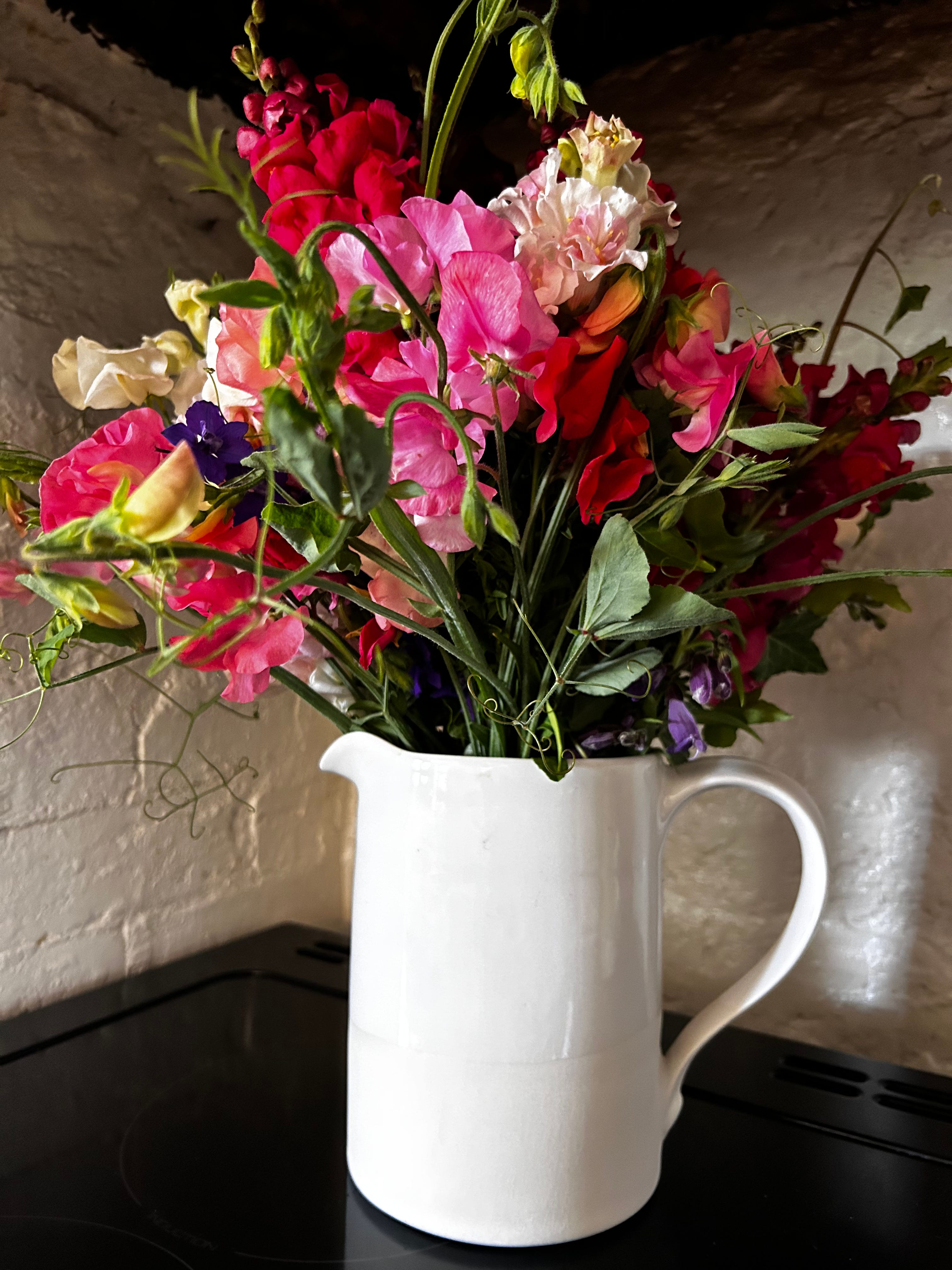
St Patrick’s Day isn’t much of a thing here, other than being recognised as the day you need to plant your sweet pea seeds. Planting now, in early autumn, means that they grow a little before the cold sets in and then spend the winter months strengthening their roots below ground. Come spring, with marginally warmer weather and longer daylight hours, they are ready to take off, in theory, blooming well before those planted in spring. I had mixed success this season - bad weather and bad timing, but even those managed to yield bunches of fragrant, sweet peas that add so much cheer. So the sweet peas are in, along with quite a number of other hardy annuals. I’m expecting big things come spring!
Persephone Books
Persephone Books is both publisher and bookshop. The shop in Bath, UK, is small, not much more than a room, and the shelves are filled with identical books, all with pale grey covers. Persephone Books selects fiction and non-fiction titles that are no longer subject to copyright and republishes them, introducing books from yesteryear to an entirely new audience. They focus mostly on women authors dating from the mid-twentieth century. Opening the grey cover, each title reveals a distinct endpaper, which, along with a matching bookmark, personalises the books.
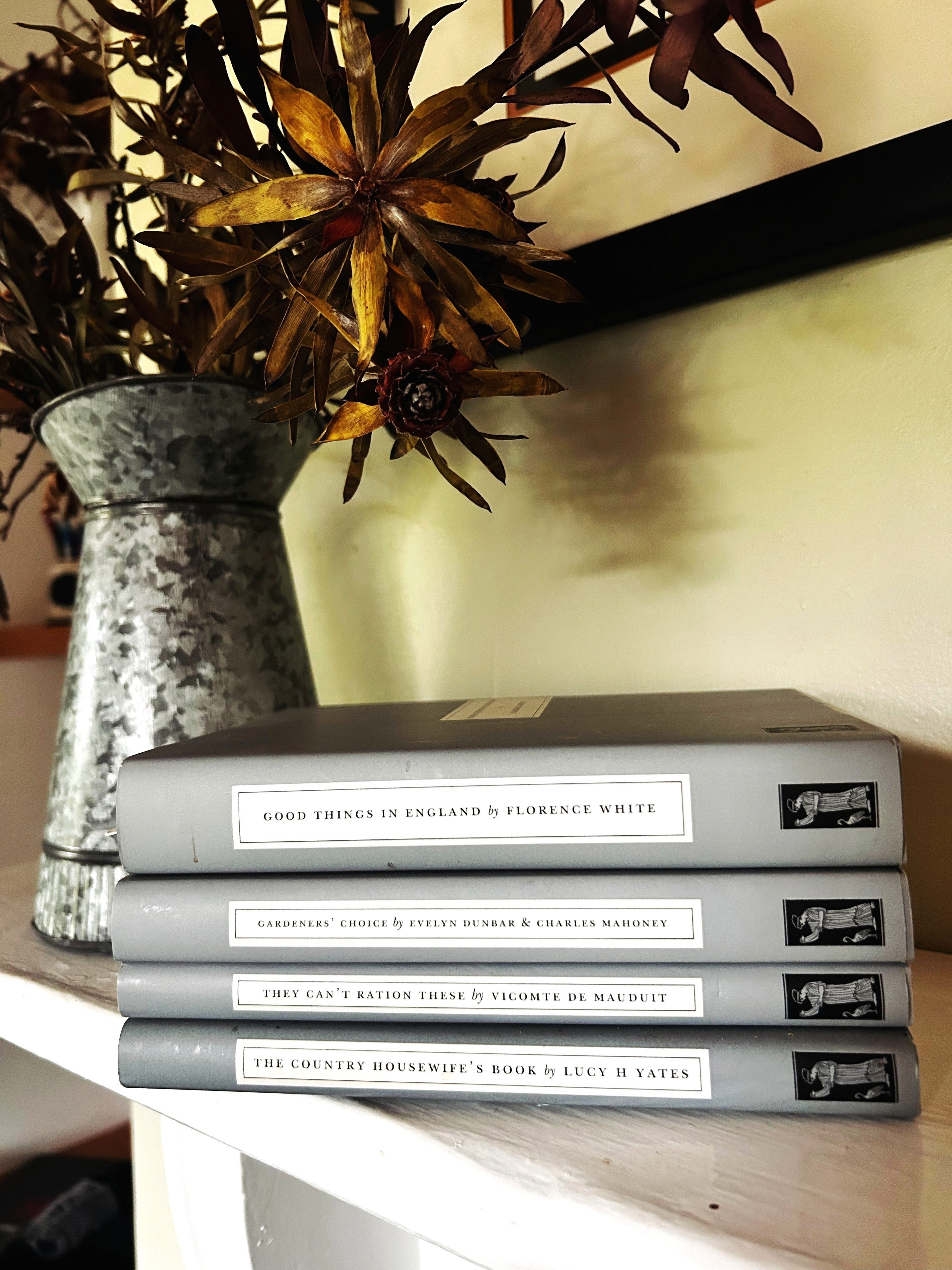
I was reminded of my Persephone Books when I read Jolene Handy’s latest newsletter, Few Eggs & No Oranges, where she dips into Vere Hodgson’s World War II diary. Jolene’s copy, printed by Persephone Books, prompted me to pull out my small collection of Persephone books. My first Persephone Book was Good Things in England, a collection of 853 recipes contributed by “English Men and Women between 1399 and 1832” and edited by Florence White. It is a treasure trove of English cooking, some dishes recognisable, others well and truly consigned to history.
The other three books in my small collection I managed to fit in my luggage when we visited the UK 18 months ago. My chosen books are excellent for dipping in and out of. They are food and garden-related and offer gems of wisdom that I love. Today’s tip from The Country Housewife’s Book - “dried and powdered chamomile leaves keep away flies and other insects, and a plant of it should be in every greenhouse. Sickly shrubs or flowers brought near it will soon recover health.” A garden dotted with chamomile as an insect deterrent sounds quite lovely. They Can’t Ration These by Vicomte de Mauduit offers suggestions for suplementing war time rations. Roast sparrows, starling stew and squirrel tail soup, along with various recipes for foraged ingredients suggest that it was a book, useful only if you lived outside of a city.
You might be interested in reading Jolene’s post. While the details in Few Eggs & No Oranges differ, there are so many parallels to current world events. Enough to make you think that humans, as a collective don’t seem to learn from what has gone before.

Baking for Easter
I promised to make hot cross buns for a meeting yesterday, at the back of my mind thinking that Easter was weeks away, but then realising that it wasn’t that far away at all. I make the same hot cross buns each year with sultanas soaked in Earl Grey tea and dried apricots. And then I was in a quandary about whether to make Simnel cakes for the market this weekend (still undecided!). I’m a creature of habit and tradition when it comes to Easter, with my baking varying little from one year to the next. I like tradition at Easter - hot cross buns, Simnel Cake, Easter biscuits and pan di ramerino, an Italian Easter bun made with fruit and rosemary. In case you’re inspired to do a little baking in the lead up to Easter, I’m sharing my seasonal recipes from the last couple of years.
simnel cake

This week, in the lead up to Easter, I wanted to share a little bit about one of my favourite Easter bakes, one that I bake every year, the simnel cake. It’s not particularly well known outside of the UK, but has a long, interesting history. And on Friday, for paid subscribers, I’m sharing recipes for a couple of other traditional Easter treats - a bis…
easter baking

Easter baking is full of symbolism. Some are based on religious beliefs, more often than not related to Christ, such as the cross on top of hot cross buns representing Jesus’ crucifixion or eating lamb, the “lamb of God”. Eggs, for many, the definitive symbol of Easter, cross both religious and pagan traditions. For some, it is a symbol of the tomb from…
I love seeing your Persephone collection, Julia, and thank you so much for including me in your wonderful post! Also: I LOVE sweet peas. 💕
Great local festival.